
The Incredible Placenta
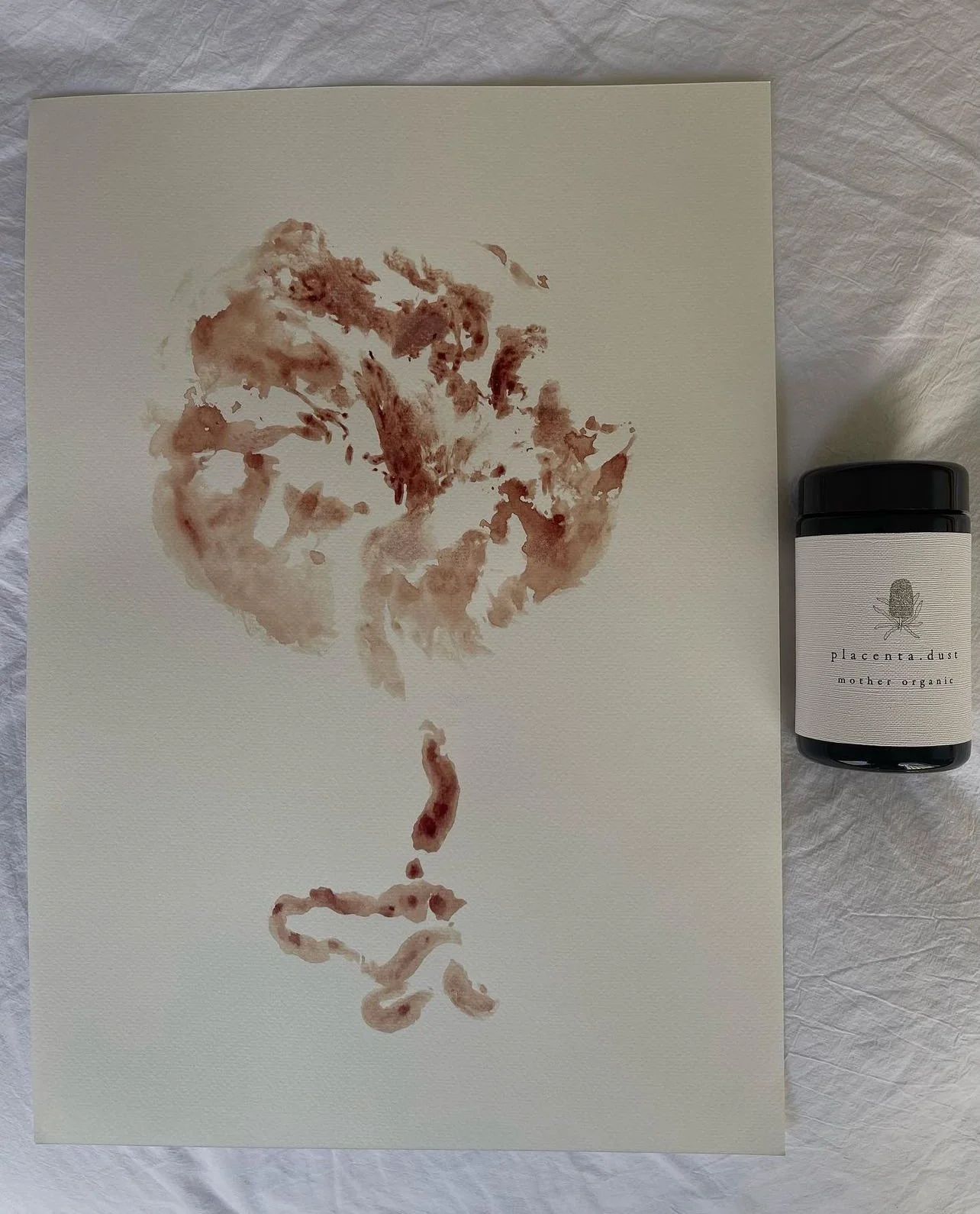
Placenta print and encapsulation/dust
The placenta is an amazing organ that begins to form in the early stages following conception and keeps your baby alive throughout pregnancy. It is the marvel that allows mother and baby to work in harmony for the first time.
When baby is developing inside of the uterus, it is submerged in amniotic fluid. This fluid is what is released when the uterine wall breaks, or what we imagine to come gushing out when the 'waters are broken'. So with baby living in amniotic fluid for up to nine months, you may wonder how it receives sustenance to survive, energy to continue developing, oxygen to breathe, etc.
Enter, the placenta. After conception occurs and the embryo embeds in the wall of the uterus, some of the cells continue to burrow deeper into the wall and begin to form the placenta. This usually happens some time around six days after fertilisation. By ten weeks gestation, the placenta is fully formed and functioning to establish the harmonious give and take between mother and baby.
The side of the placenta that is attached to the uterine wall is is developed from the mother’s tissue and is called the Basal Plate. The other side of the placenta that is attached to the umbilical cord is from the foetus’ tissue and is called the Chorionic Plate. Between these two plates is a pool of the mother’s red blood cells. The mother’s red blood cells enter the Placenta through her veins penetrating the basal plate. These red blood cells carry oxygen and nutrients.
The baby and the placenta are connected via a cord like structure containing a vein, and two arteries. The vein carries oxygen from the placenta to the baby, and the arteries carry waste away from the baby back to the placenta. The vein and arteries are encased in something called Wharton’s Jelly. Together, these make up the umbilical cord.
The umbilical cord is connected to the placenta via little branches of cells called ‘trophoblasts’ these are the cells of the fetus. Within these trophoblasts are blood vessels. Oxygen and nutrients from the red blood cells make their way into the blood vessels, and carbon dioxide and waste are expelled from these blood vessels and carried away back through the mothers uterine arteries. Mum’s red blood cells and baby’s red blood cells do not touch, there is just an exchange of nutrients and waste within the placenta.
The placenta is a beautiful organ, and many cultures acknowledge and honour its function in sustaining baby’s life in many different ways.
Many Indigenous Australian cultures incorporate ceremonial practices as they bury their placenta on country surrounded by female family members. One belief is by burying the placenta, they are giving back to Mother Earth to let her know that a child has been born, and so she can continue to nurture the child and the soul (1)
The Maori people of New Zealand bury the placenta to symbolise the connection between the newborn baby and Mother Earth. Maori culture uses the same word for placenta and land (whenua) (2). The placenta and umbilical cord are traditionally buried within a place holding ancestral connections. The ritual is the origin of the proverb ‘He tang nō the whenua, me hook anō ki the whenua’ (What is given by the land should return to the land).
The Balinese people in Indonesia have a ritual or tradition of encasing the placenta within a coconut shell and hanging it from a tree within the village cemetery. It is believed that by doing so, the child will be protected from illness and other misfortunes. In fact, the village cemetery of Baying Gede, Indonesia, has become a regular tourist attraction as hundreds of placentas remain suspended from trees within the cemetery (3).
There are many ways that you too can honour the life your placenta has given you. One simple way is by taking it home, burying it in your garden and planting a tree on top. This gives your placenta new life as it nurtures and nourishes in new ways and helps your tree to thrive.
1. https://www.croakey.org/wp-content/uploads/2021/05/Wathaurong-placenta-garden.pdf
2. https://collections.tepapa.govt.nz/topic/1437
3. https://balidiscovery.com/hanging-placenta-trees-of-bayung-gede-bali/