
Your birthing options in South Australia
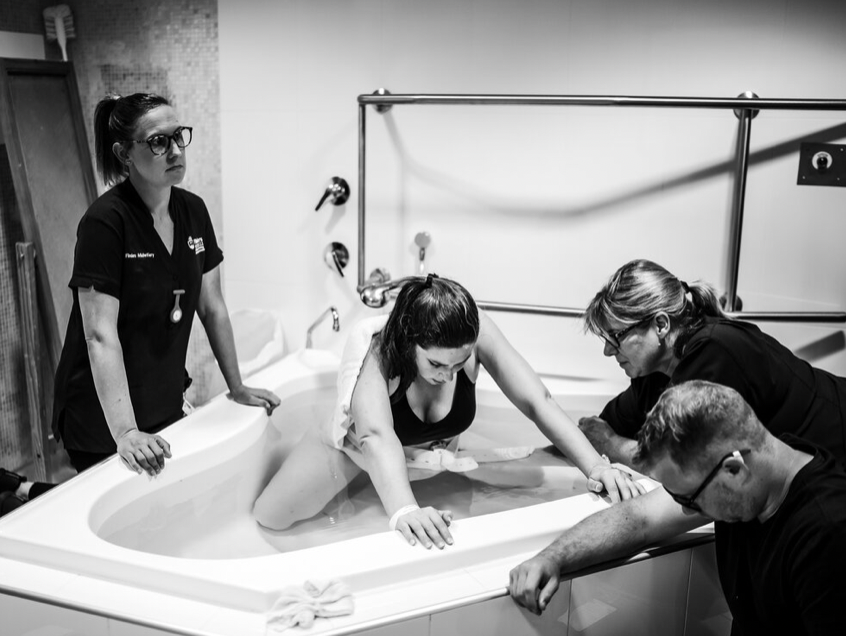
Image taken by the incredible @littlerosephotography
I will never forget the moment that my doctor confirmed my pregnancy at six weeks. I was elated and despite being prepared to be in this situation at some point, I was surprised and slightly overwhelmed. Because amongst receiving the news, she then asked me what my plan was regarding the birth. Did I want to go private? Public? GP shared care? All of these questions started spinning around in my mind. Would going private mean a more comfortable experience? What if my baby required special care or time in NICU? Would I receive continuity of care? What even ARE all of my options?!
I began researching and very quickly found that there are limited resources regarding this matter available to women and families. So, my hopes are that this blog will provide you with some clarity about the birthing options available to you and some of the pros and cons for each to help make your decision a little clearer if you find yourself in the situation that I did.
PRIVATE:
For many families, especially first time ones, comfort and luxury are high on the list when deciding on where to birth. Those with pregnancy cover on their private health, or those willing to pay entirely out of pocket, have the option of birthing at one of the four private hospitals in Adelaide.
If you have decided to birth privately, you will be required to choose from a team of Obstetricians that will provide you with continuity of care throughout the duration of your pregnancy. Once your GP confirms your pregnancy, they will be able to provide you with a list of Obstetricians at your chosen hospital. This Obstetrician will be present at all pre-birth appointments and ultrasounds often accompanied by a midwife, and is on call for you and your needs. It is important to note that should your birth not align with your Obstetricians schedule, they may not be present at your birth, but will instead send their back up who you may meet in one of your appointments.
The private hospitals in Adelaide are:
- Ashford Hospital
- Calvary Hospital
- Burnside Hospital
- North Eastern Community Centre
It is true that private hospitals offer a high level of comfort. You will be treated with your own private room and ensuite and a much larger space, a la carte food service, and added comforts such as television, mini fridge, double bed, and WIFI. There is also the guarantee that your partner can stay in the room overnight if that is what you wish, so if privacy and comfort are of high importance to you then birthing may be the best decision.
If you have private health and you decide to birth in a private hospital it's important to know that fees and out of pocket expenses (gaps) may be required. You are often charged for each service, including paying for your Obstetrician (who charge their own rate), ultrasounds, newborn care, high quality hospital stay, epidurals, and more, so it’s important that these details are discussed with your healthcare provider, doctor and chosen hospital about the expected and potentially unexpected costs of your treatment. Australian statistics show that the average cost of birthing privately can range between $2,500 - $20,000 for an individual with private health, and between $9,000 - $30,000 for those without private health.
It’s also important to know that while private hospitals provide a high level of comfort many do not have NICU or special care services available should your pregnancy be deemed as ‘high risk’ or your newborn require closer monitoring and care post-birth. Should this occur, you will likely find yourself in a public hospital anyway. Statistics have also shown that birthing privately increases your risk of inductions, intervention and unplanned caesareans for women deemed 'low-risk'. Many private hospitals are also not as open to water-births if this is your preference.
PUBLIC:
Public hospitals in Adelaide are there to provide a more affordable and accessible option to families who need it, or choose it. You can have private cover on your health care and still choose to birth publicly. Birthing publicly is almost all, if not entirely, covered by Medicare. The average cost of birthing in the public system in Australia is between $0 - $1,500 which is a significant difference to the private system.
The public birthing hospitals available in Adelaide are:
- Lyell McEwin Hospital
- Women’s and Children’s Hospital
- Flinders Medical Centre
One big difference between private and public can be the continuity of care. If you find yourself in the public system, you will be cared for by midwives in the hospital and not an Obstetrician, unless a complication occurs. You may have a different midwife at each appointment and while your details are noted within the South Australian Pregnancy Record that is provided to you at your first appointment, sometimes you may feel as though you are repeating yourself every time. You may not know or have met the midwife that delivers your baby, so if this is something that is important to you then one of the other options may be more well suited.
All of the major public hospitals in Adelaide are well-equipped with a NICU or special care ward, so you can guarantee that should an issue arise with your new little one, they will be in the best place and not require a transfer and you will be right there with them. There is also often a significantly less number of pre-birth appointments when birthing publicly as well if everything is tracking well.
In terms of the hospital rooms, you may be required to room share with another mother, which can sometimes feel tricky if your little one is unsettled, but there are some private rooms available. Partners are often unable to stay the night and instead will adhere to visiting hours, but should you find yourself in a private room, there is often a spare bed for them. You will receive three meals a day off of a limited menu, share an ensuite, and sometimes feel as though you have no privacy when guests come to visit.
With care in the public system being midwife-led there is more encouragement for a physiological birth and lower induction/intervention rates which can be a big selling point for some people. If your labour and delivery are smooth sailing, there is also a higher chance of being able to go home a lot quicker than if you were in the private system, which can also be an attractive point for families just wanting to go home and settle into their new life in their own surroundings.
MIDWIFERY GROUP PRACTICE (MGP)
The Midwifery Group Practice (MGP) care within Adelaide can be seen as a nice middle ground. It provides the free midwife-led care of a public hospital but with the continuity of care that one would receive in the private system. It allows families to be cared for by one or two midwives throughout the journey of their pregnancy, birth and immediate postpartum. This allows families to become familiar with their midwife and establish a lovely, ongoing, relationship.
The nature of the MGP is extremely competitive due to a limited number of midwives and a large waitlist. Generally, you will be asked at your first appointment if you would like to go on the waitlist for the MGP and you will find out around 15 weeks if you are successful or not. Should you find yourself unsuccessful, don’t give up hope. They will continue to leave you on the waitlist should a spot appear. I found out that I was unsuccessful at 13 weeks and was then offered a spot at 37 weeks!
The nature of this care, being midwife-led, is much more physiological-based. Midwives will encourage and support you to labour and birth naturally, with little intervention and pain relief if you are able to and they are happy to support a water birth and the continuity of care means that your midwife is your point of call when you need something throughout your pregnancy and labour. After you are discharged, they will also attend at-home visits up to six weeks postpartum to ensure that you and your baby are healthy and settling into your new life well. They also endeavour to have you discharged sooner if everything has gone smoothly with the birth.
The MGP is run through the free public system, so the facilities of the public hospital and/or birth centre are the same as above, but the continuity of care makes up for not having all of your creature comforts. All of the public birthing hospitals in Adelaide offer this option:
- Women’s and Children’s Hospital
- Lyell McEwin Hospital
- Flinders Medical Centre
And more broadly:
- Riverland General Hospital (Berri)
GP SHARED CARE
GP Shared Care is an arrangement that is made between your General Practitioner (GP) and your birthing hospital/birth setting. In this model, your GP will provide you with most of the antenatal and postnatal check ups and care, but you will need to have some appointments at the hospital in your early/late pregnancy. It needs to be considered that GP's often run late for many appointments, so if you are time poor this would need to be a consideration.
All of the public hospitals in Adelaide do offer GP Shared Care, but you will need to confirm with your GP to see which hospital they are aligned with or if they have an agreement with a private hospital. It is also worth noting that GP Shared Care does not allow for home births either.
This option is attractive for some people as they may already have a familiarity and longstanding relationship with their GP as someone who knows them personally and their medical history. Another positive is if you are eligible for Medicare then the costs can be kept quite low! However, given that most GP’s now no longer bulk bill, you may have to pay the gap for each appointment which can become more expensive than birthing publicly. This should be discussed with your GP at your first appointment though. Another point to think about is that your GP may not be able to answer any questions as thoroughly as a midwife or Obstetrician would be able to.
HOME BIRTH
Home birthing is when you decide to birth in your safe space at home under the care of a private midwife and extended birthing team or though the MGP as mentioned above. There is a large stigma regarding home birthing as being unsafe or risky but many of these assumptions are unvalidated. For more information on the myths and benefits of home birthing and why it is on the rise in Adelaide, you can read my blog here (I will be uploading another blog on this topic).
If choosing to home birth in Adelaide through the MGP, you personally do have to meet certain requirements:
You must only be pregnant with one (1) baby
You must weigh less than 100kg
You are more than 37 weeks pregnant and less than 42 weeks on date
You have not had a previous caesarean
And more. These requirements will be discussed in your initial meeting with your midwife.
When home birthing, while your antenatal appointments can generally be longer than your standard obstetric and hospital models, most of this care is offered in the comfort of your own home. MGP midwives and private midwives often share the same values and philosophies around home birthing as yourself and encourage a drug free and physiological delivery of your baby. The option of a water birth is there should that be something that you are considering, and your midwife can assist you in ensuring that you have all of the necessary equipment ready for one.
If enlisting the services of a private midwife and are eligible for Medicare, then you will receive rebates for a portion of your care. The amount that Medicare covers will vary according to your individual circumstances, but your chosen midwife will be able to provide you with further information on this in your first meeting. Some health funds will even cover midwifery services, and potentially even some out of pocket costs that are associated. To find out what is covered you will need to contact your private health fund directly. While each private midwife structures their costs differently, the average cost of a private midwife can range from between $2,000 to $6,000. As there are so many variables when it comes to the cost of home birthing, it is wise to ensure that you check with all providers initially.
It is important to understand that like with any labour and birth, there are small moments in which medical intervention is required. Should this occur during a home birth, there is always a time pressure associated with the transfer of mother (and child) to hospital.
While home birthing is a very big commitment, studies show incredible results for both first time mothers and subsequent pregnancies. Women who home birth are less likely to have labour and birth interventions, experience perineal trauma or haemorrhage and are more likely to initiate breastfeeding earlier.
FREE BIRTH
Free birthing is not the same as home birthing and while it is still a very taboo topic, it is completely legal in South Australia. Free birthing is when the mother decides to birth her baby at home with no medical/midwifery care or guidance. Just complete trust and faith in her intuition, her baby and her body.
There are many reasons why a woman would choose to have a free birth such as feeling independence and control over their baby’s birth, or maybe because the woman has a strong belief in her body’s ability to birth her baby with no help, or possibly because they may have past trauma from the medical system.
It is important to note that while there are ways that you can make your free birth as safe as possible, there are associated risks as well. These risks include:
Undetected complications and an inability to have access to immediate care
Potential excessive bleeding or haemorrhaging
Potential infection
Undiagnosed underlying health conditions
Possibility of issues relating to the cord
Changes in baby’s heart rate
And more.
A doula during a free birth can provide incredible support and guidance, and while it can be hard to find one that attends free births, they are out there. As a birthing woman, it is important to remember that you have the right to advocate for yourself and your baby and weigh up the risks and benefits of free birthing if you are considering going down that path.